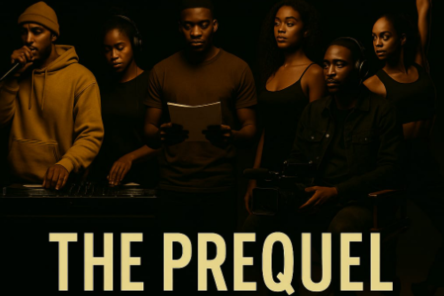
It won’t just be a series – it will be a heartbeat and a breath for the era’: Producer Rilwan Jaji on Ventilation, inner-city realism and reshaping narratives from the inside out

📸All Portraits: Rilwan Jaji during development (studio, 2025)
London-based creative-producer-founder Rilwan Jaji moves through inner-cities to measure what it does to people: the ambition it sharpens, the survival it demands, the quiet endurance it normalises.
As founder of Heart of the Era, he's turning lived experiences and intelligences into a slate of story worlds across film, series, and interactive media. But Ventilation is the first test: a series born more than a decade ago and in hard condition, returning now to see if it still speaks — and if it can carry far beyond the streets that formed it.
"The fight isn’t only on the page" Jaji says. "It is in the unseen places: in the corporate rooms he’s trying to enter — and the long work of meeting the world and his targets where they really are.
“With my ears to the street, nose to the dirt, and eyes on the bigger picture."
A Fight — A Story of Becoming in a hard place. That Fight is VENTILATION.

H
E BEGAN MORE THAN A DECADE AGO AS A YOUNG MAN NAVIGATING INNER-CITY LONDON, WHERE PRESSURE, PRIDE, AND POSSIBILITY LIVE ON THE SAME STREET.

The proving ground: The ground is wet and the steaks are real. The expression changes, but the pressure remains.
WHERE THE GROUND WAS WET AND THE STAKES ARE REAL
Born and raised in the concrete jungle of inner-city London. Jaji grew up inside a city defined by pressure, ambition, contradiction, and quiet endurance. The environment partly informed not only how he saw the world, but how he learned to listen to it.
Moving through and around many and different parts of this old, grey and restless city, Jaji observed how people adapted, hustled, resisted and survived — often quietly, often invisibly.
Ventilation emerged from those lived experiences: a lens into how real lives navigate limitation, ambition and consequence.
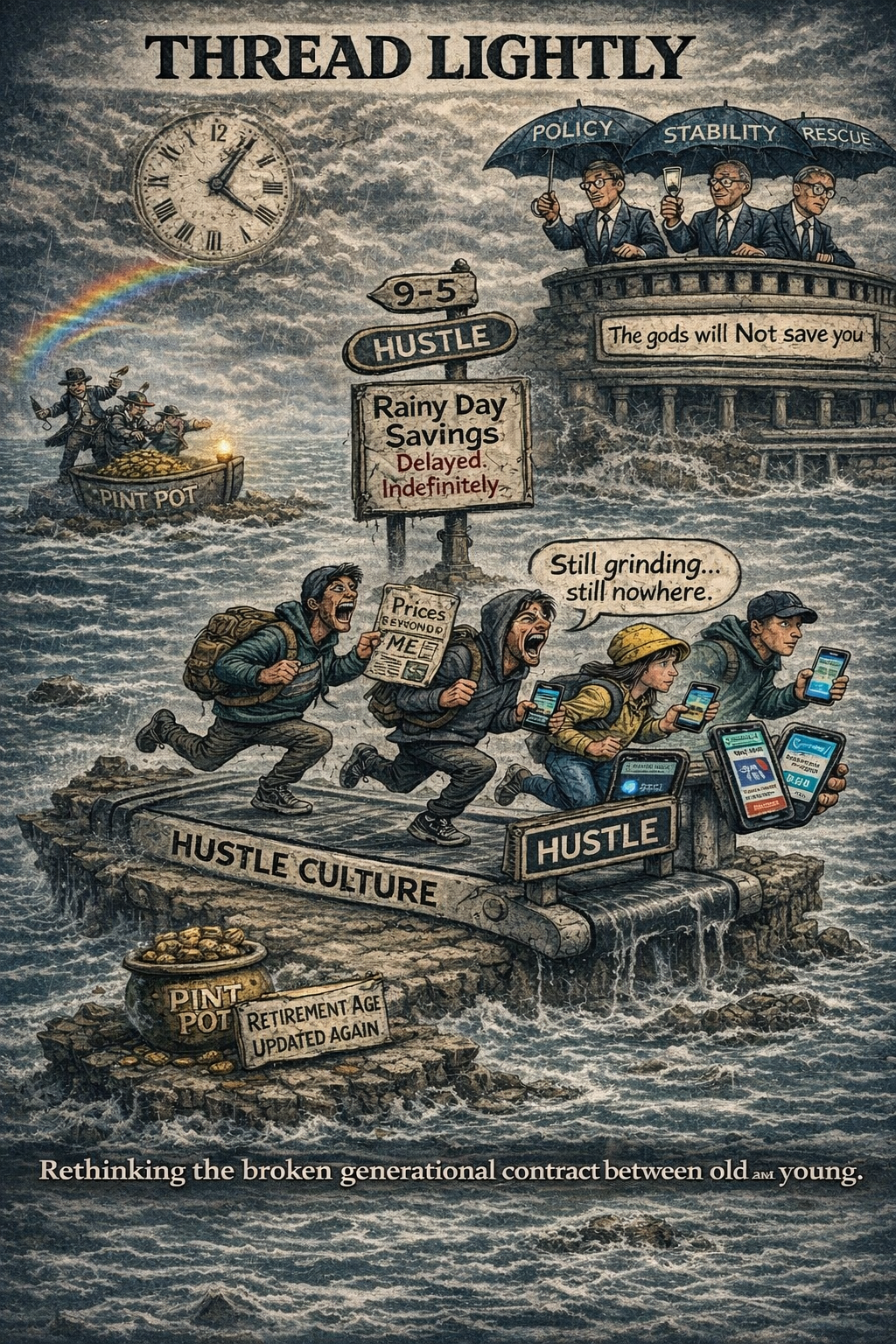
📷 Illustration:Rilwan Jaji/Heart of the Era
Rain, Grind and Survival
Just as the frequent rainy days in London, life in the city for a lot of us is no-switch-off.
You're either down to grind or getting grind down — so grind-time is always on.
The UK-cities work you till you're old, grey and depleted, get a load of that! yet you're supposed to save for a rainy day, cop a load of that!
That's your pension pot by the way — a pat on the back for the laborous years you've put in, now have some of that!
For many — of different ages, underprivilege and inner-city generation — this is illusion shattered.
In this era of hustle culture, survival demands movement: money to make things happen, money to survive in this world.
Things change on you
People change on you
The forces are out to get you
The gods will not save you.
Rilwan came of age in South East London, in the charged intensity of the inner city, where ambition and survival live side by side. That terrain is where Ventilation was born: a series rooted in street-level, lived and learned truths, shaped by contradictions, and driven by the pressure people carry - quietly and daily. It is a terrain shared across many of cities around the world — places that pulse with human energy, struggle, and survival — where lives unfold in plain sight, yet too often remain unheard.

The Big Rich Town: The City with the Big Red Bus. The Big Ben. And from a bleak outlook a place where the system drives people to toll immorality and crookery.
"My Ventilation doesn’t claim to know every life — but it knows the mud we rise from."
Ventilation treats the inner-city not as scenery, but as pressure - the force people carry, absorb and push against every day.
It follows characters navigating proving grounds where nothing comes easily — where ambitions collide with limitation, and survival leaves marks.
The series is interested in the fight in people, what people will and willing to fight for, and what it costs them to keep going.

Come rain, come what may
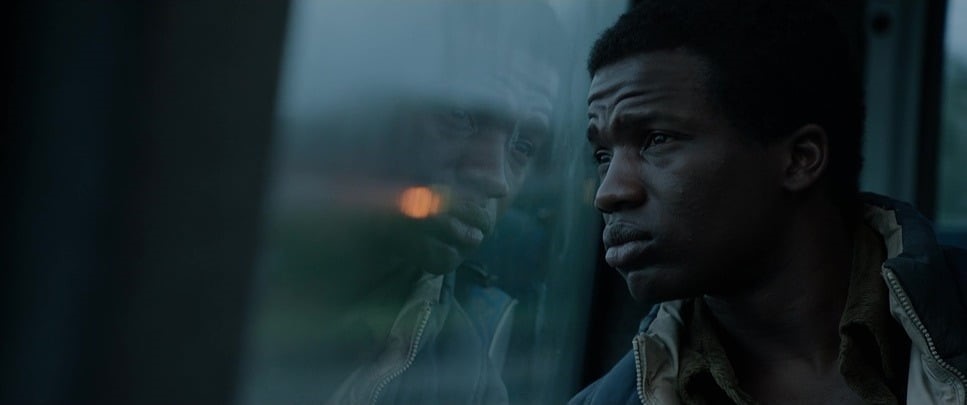
You see yourself in the story
"In a sense
I found a fight
and
a story of a fight
and
becoming
in a hard place."
ACT II -
A Return to Test whether Ventilation Still Breathes
When Jaji returned to Ventilation — an episodic drama written over a decade earlier as an aspiring young man navigating inner-city London with urgency and limited options — he didn’t know if the script would endure.
The creative fieldwork is to explore the question: could a story born in one era still speak to another?
Over the past year, while building his production company Heart of the Era, and working through what came next professionally and personally, Jaji immersed himself in intense creative development — advancing original projects toward production. In that process, he found himself drawn back to Ventilation.
What began as a return became an experiment: a deliberate attempt to test whether the script still breathed.
Back then, the story felt
necessary. What lingered
was a quieter question:
would it still matter now
— in another era?
"The Return was to test Ventilation written over a decade ago"
"I trusted my initiative, Instinct and movement to
to guide the process rather than rigid planning."
“I needed to see whether Ventilation — written in one era of my life — still breathed and speaks to this era — the times that we’re living in.”
“The City Speaks — if you
know how to listen.”
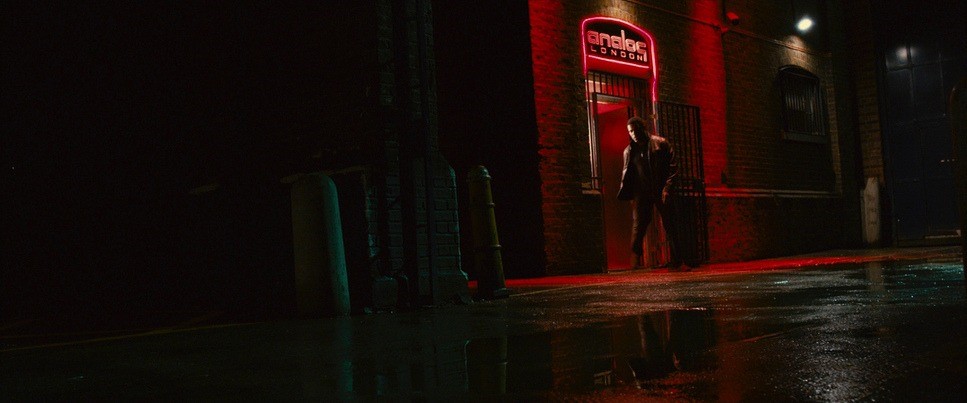
Jaji spent months moving through the city that had shaped the original script. He travelled across inner-cities, placing himself back into the environments that had once informed the work. This time, the movement had a different purpose. Where earlier chapters of his life were marked by urgency and limited options, this phase was defined by intention and clarity.
He wasn’t searching for direction; he was testing whether the story still held.
“I’m outside moving through the chosen avenues some days and many nights, I’m getting to work, immersing myself with my ears to the street, nose to the dirt and eyes on the bigger picture, I put myself in the path of my subjects, set myself to see more, have conversations, hear deeply, gain needed experiences in the vibrant pulse of the city and make connections that reflect the fabric of contemporary life.”
Street slang and cultural expressions keeps changing he observed, influenced by social media, youth influence and evolving survival strategies. New expressions surfaced. Old pressures remained.
The city had changed, but not entirely. Neither had the questions Ventilation was asking.

“The City Speaks — if you know how to listen.”
What followed was not nostalgia, but testing. Jaji moved through the city without announcing himself - watching how people gathered, waited and adapted. What emerged wasn’t reassurance, but recognition. The expressions had shifted. The pressure had not.
Beneath the slang and surfaces, the
same weight remained — frustration,
desperation, urgency, the need to
make something move.

"I'm experiencing more, seeing more, having conversations, listening more and understanding more of how ambition still rubbed against limitations."
The early movement of Ventilation unfolds as a day in the life of an inner-city neighbourhood — from corner to corner — part social hub, part survival zone — carrying the rhythm from daylight into night.
Through intersecting lives — everyday people, hustlers, creatives, and dreamers — the series observes how ambition rubs against limitation, how pressure reshapes identity, and how survival quietly becomes a form of intelligence.
Like the best street-level dramas, Ventilation isn’t driven by spectacle, but by rhythm: the cadence of banter, the silences between words, the tension that lingers in the air.
This structural choice — compressing a community into a single lived cycle — echoes a lineage of observational storytelling that reshaped modern television. David Simon’s Homicide: A Year on the Killing Streets and The Corner: A Year in the Life of an Inner-City Neighborhood didn’t simply dramatize crime; they documented ecosystems — the invisible systems of pressure, ritual, survival, and consequence that govern life at street level. Those books would later seed series like Homicide: Life on the Street and The Wire, proving that grounded, embedded storytelling could reshape the cultural conversation.
Ventilation emerges from the same instinct — not as imitation, but as continuation.
Where Mr Simon mapped Baltimore’s corners, Jaji returns to the streets that shaped him in inner-city London — tracing how ambition, surveillance, migration, digital culture, and economic compression have evolved the terrain.
Different city. Same gravity. Different generation. Same pressure.
The opening episode, Panorama, unfolds on a Friday — a moment when a neighbourhood transitions from workweek fatigue into social release. Music spills into the streets. Style becomes performance. Energy gathers. Outsiders arrive. Locals posture. Corners become stages. Information moves faster than intention.
By nightfall, that fragile equilibrium fractures — interrupted by violence, loss, and consequence. What begins as vibrancy ends in rupture. A community is shaken. A protagonist is formed. Memory becomes responsibility.
“You see yourself
in
the story before
You
see the lesson,”

ACT III –
A Time for Potential to Meet Power.
There comes a point in any serious creative journey where effort alone is no longer the question. The work has endured its proving ground. It has survived without permission. It has clarified its own intent. What began as instinct has become deliberate. What was once pressure has settled into purpose.
At this stage, distance is no longer protective – it becomes limiting. The work must begin to move toward the structures that shaped its future: platforms, partners, capital and audience.
This is that Moment.

A Time for Potential to Meet Power.
What can look like wandering is often preparation.
What can feel beneath calling is often training.
Ventilation was not written to chase approval cycles or shortcut access. It was developed away from institutions, and without expectation of access.
That distance shaped the work. It forced clarity and also created a boundary. The work was not meant to remain insulated forever. At some point, creative autonomy must engage infrastructure - distribution, capital, partnership and long-term scale.

Jaji often returns to
a remark by filmmaker Michael Roemer, director of the seminal 1960s drama Nothing But a Man:
“It’s a little crazy, you know? You put everything into this thing. It’s this and nothing else. And whatever happens next, I can’t think about.”
What emerges is not ambition newly discovered, but work that has already learned how to stand.

“It's a
cinematic conversation
between
the streets and stage,
the corner and the culture”
What has changed is not the story — but the conditions around it.
The questions Ventilation asks — about pressure, ambition, survival, and agency — have not softened with time.
If anything, they have sharpened.
Jaji says.
Through Heart of the Era, he is no longer simply building a series. He is constructing a long-form cultural framework — one designed to hold complexity rather than resolve it, and to scale without losing its centre.
The questions he raises are not local
— but of the era:
Ventilation asks how ambition, resilience, and identity behave when pressure becomes permanent — when cities, environments and systems, shape lives through constraint.
These questions do not belong to one neighbourhood, one generation, or one culture.
They echo wherever people are fighting, navigating limitation and trying to build meaning inside it.
How does ambition survive in environments designed to suffocate it?
What allows resilience to take root where the soil is thin — and hope to persist when the odds are stacked against it?
“At the end of it,” Jaji says,
It won’t just be that I made a series.
It will be that the series became a breath —
for the people, for the culture, for the era.
The work offers a deeper way of seeing what we already live inside.
Raw, Poetic, and Resolutely True to Life.
"It’s a cinematic conversation between the streets
and the stage, the corner and the culture.”
Ventilation arrives with presence. It observes how people stand inside pressure —
how survival reshapes intelligence, how patience becomes strategy, and how quiet
endurance often carries more power than visible noise.
Through Heart of the Era, Rilwan Jaji continues a long-term commitment to building
work outside permission — developed away from shortcuts and institutions until it is
strong enough to carry its own weight. The aim is not simply to make content, but to
build story systems capable of holding complexity, cultural memory, and forward
movement without losing their centre.
Ventilation does not arrive with answers. It arrives with presence.
At its core, Ventilation becomes a breathing space — for reflection, for recognition,
and for re-imagining how stories can speak to the era we are actually living in.
Support my Production
r1heartfoundation@gmail.com
By Rilwan Jaji – Writer | Producer | (Founder Heart of the Era)
Ventilation is currently seeking partners for development — streaming platforms, co-producers, and funders.